


Customer data has never been more valuable.
Every interaction, email, meeting, form submission, support request, and purchase contributes to a better understanding of the customer journey. Yet for many organizations, this information is still spread across multiple platforms that rarely communicate with each other.
Marketing works in one system.
Sales works in another.
Customer success relies on different tools.
Finance maintains its own records.
As a result, every team sees only part of the picture.
As artificial intelligence becomes more integrated into business operations, fragmented data is becoming one of the biggest barriers to growth. AI, automation, and reporting all depend on having reliable and connected information.
Organizations that are investing in connected customer data are improving visibility, making better decisions, and creating more consistent customer experiences across the entire revenue lifecycle.
Why Connected Data Matters More Than Ever
Customer expectations continue to evolve.
People expect companies to understand their previous interactions, communicate consistently, and respond quickly regardless of which department they contact.
This is difficult to achieve when information is fragmented.
According to TechRadar, 2025, 34% of businesses report losing revenue because of fragmented customer data.
Disconnected data often leads to:
- Duplicate customer records
- Inconsistent reporting
- Poor lead handoffs
- Conflicting customer information
- Manual work across teams
- Missed revenue opportunities
The challenge is no longer collecting more data.
The challenge is making existing data work together.
Organizations that solve this problem gain a significant operational advantage.
Customer Context Drives Better Decisions

Data becomes much more valuable when it provides context.
Knowing that someone downloaded an ebook is useful.
Knowing they also attended a webinar, spoke with sales, opened three follow-up emails, and recently submitted a pricing request tells a much more complete story.
This context allows teams to make better decisions across every stage of the customer journey.
Marketing can build more relevant campaigns.
Sales can prioritize conversations more effectively.
Customer success can identify expansion opportunities earlier.
Leadership gains more confidence in forecasting and reporting.
Connected customer data transforms isolated activities into a complete revenue picture.
HubSpot Is Designed Around Connected Customer Information
One reason many organizations choose HubSpot is its ability to centralize customer information across multiple business functions.
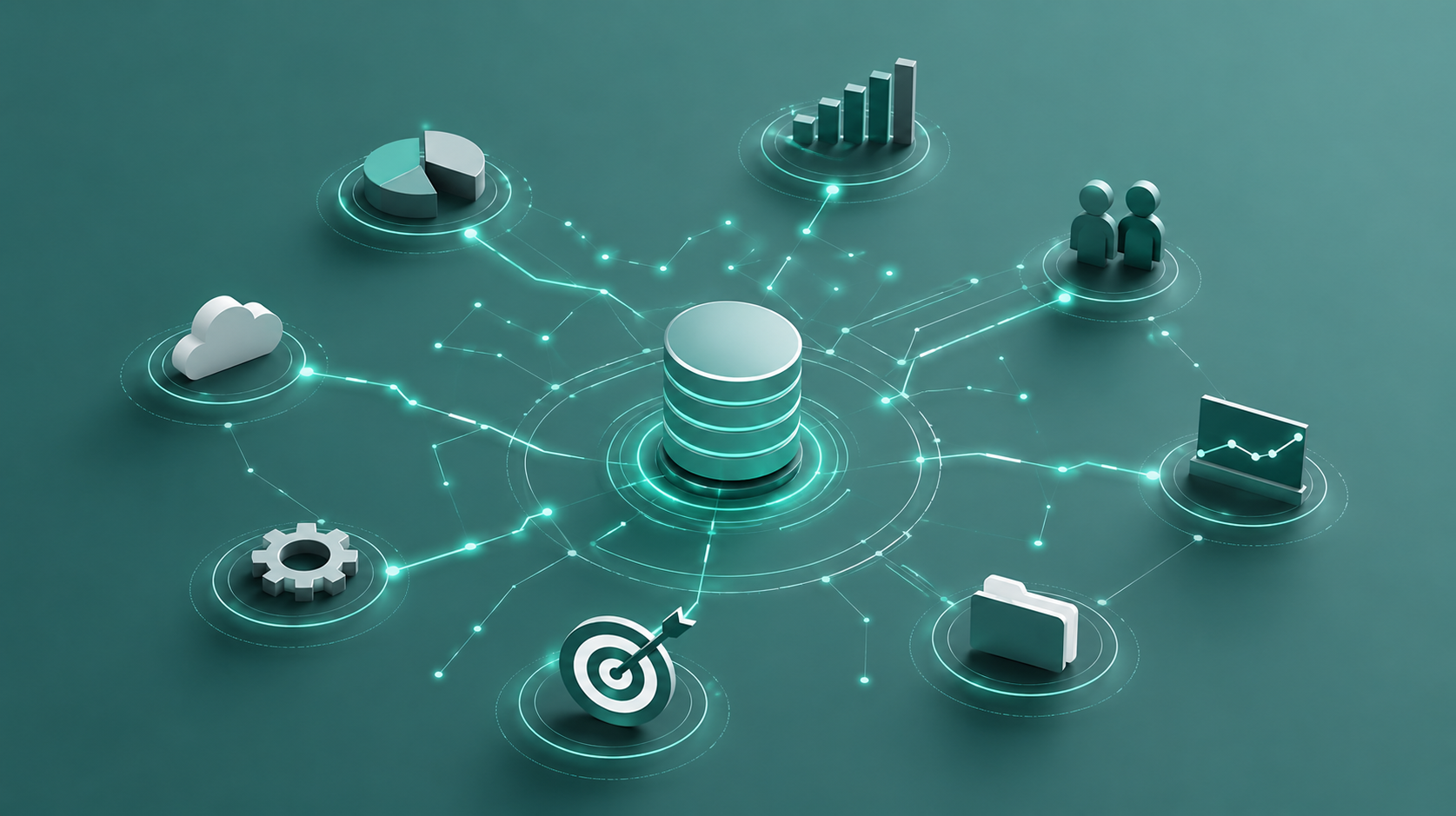
Rather than treating marketing, sales, and service as separate systems, HubSpot connects them through a shared CRM.
Teams can view marketing engagement, sales activities, customer support interactions, website behavior, lifecycle stages, deal progression, and communication history from one place.
This gives every team access to the same up-to-date customer information, reduces duplicate or inconsistent data, and eliminates the need to search across multiple platforms.
This improves collaboration while reducing operational complexity.
RevOps Depends on Connected Data
Revenue Operations is built around alignment.
That alignment becomes difficult when every department manages different versions of customer information.
Connected customer data helps RevOps standardize how information moves across the organization.
This improves:
- Lifecycle management
- Lead routing
- Pipeline visibility
- Forecast accuracy
- Attribution reporting
- Operational consistency
Rather than focusing only on technology, RevOps creates processes that ensure information remains reliable as customers move through the revenue lifecycle.
The result is greater visibility and fewer operational silos.
AI Performs Better With Better Context
Artificial intelligence is becoming an essential part of modern business operations. Organizations are using AI to qualify leads, generate content, automate workflows, improve customer support, uncover insights, and assist with sales recommendations.
However, AI is only as effective as the data behind it. When customer information is incomplete, outdated, or scattered across different systems, AI lacks the context needed to deliver accurate recommendations and meaningful automation. This is especially true for AI inside HubSpot, where connected customer data enables more personalized experiences and smarter automation.
When customer data is unified, AI can understand previous conversations, purchase history, marketing engagement, support interactions, product interests, and each customer's stage in the lifecycle. With this complete context, AI can provide more relevant insights, automate tasks more accurately, and help teams make faster, better-informed decisions.
For many organizations, improving data quality delivers greater business value than simply adopting additional AI tools.
Integrations Are Becoming a Business Requirement
Most organizations rely on more than one platform.
CRM systems, marketing automation, finance applications, communication tools, customer support software, and internal databases all contribute valuable information.
The challenge is ensuring these systems exchange information reliably.
Modern integrations help reduce:
- Manual data entry
- Duplicate records
- Reporting inconsistencies
- Operational delays
- Human error
Rather than replacing existing systems, organizations are increasingly connecting them into a single operational ecosystem.
This creates better visibility while allowing every platform to contribute to the customer journey.
Better Data Creates Better Customer Experiences
Connected customer data benefits internal teams, but its biggest impact is often experienced by customers.
Customers expect organizations to remember previous interactions.
They expect sales representatives to understand marketing conversations.
They expect support teams to know their purchase history.
They expect communication to feel connected.
When customer information is unified, these experiences become much easier to deliver.
Organizations can provide:
- More personalized communication
- Faster response times
- Consistent messaging
- Better onboarding experiences
- More proactive customer support
These improvements strengthen trust while creating opportunities for long-term customer growth.
Connected Data Supports Smarter Growth
Growth becomes increasingly difficult when teams spend more time finding information than acting on it.
Connected customer data reduces that friction.
Instead of asking:
"Where is the information?"
Teams can focus on:
"What should we do next?"
This shift improves operational efficiency across marketing, sales, and customer success.
It also creates a stronger foundation for automation, analytics, forecasting, and AI.
Organizations become more agile because their decisions are based on complete customer context rather than isolated data points.
Looking Ahead
As AI capabilities continue to evolve, connected customer data will become even more important.
Future AI agents will rely on complete customer context to execute workflows, recommend actions, identify risks, and support revenue teams.
Organizations that invest in connected systems today will be better positioned to take advantage of these capabilities tomorrow.
Technology alone will not create that advantage.
The quality, structure, and accessibility of customer data will.
Final Thoughts
Connected customer data is no longer just an IT initiative.
It is becoming a core part of modern Revenue Operations.
Organizations that centralize customer information improve collaboration, strengthen automation, generate more reliable reporting, and create better customer experiences.
They also build the foundation that AI needs to deliver meaningful business value.
At SR Pro, we help organizations connect their customer data through HubSpot, RevOps strategies, custom integrations, and tailored Martech solutions. By creating a unified operational environment, businesses can reduce complexity, improve decision-making, and build scalable systems that support long-term growth.